onsdag 3 mars 2010

Logotype

Here is the LAPLander logotype.
Enjoy!


Update from Esrange!

Hi!

An update from Esrange, Kiruna:

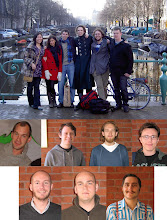
LAPLander is assembled and mounted in the Rexus 8 rocket. In the photo you can see the LAPLander team in front of the rocket. To prepare for the launch a test countdown was performed today. The preliminary time for launch of the rocket is tomorrow at 9. 30. A recovery helicopter will search for the rocket and LAPLander after the launch. If the helicopter fails to find it, the backup plan is to search for it with a snow mobile.

By the way, here is a clip from the launch of Rexus 7!

http://www.youtube.com/watch?v=kyhKTRb1YsM


Team LAPLander in front of Rexus 8

torsdag 25 februari 2010

This mornings video post. Click the video so you can see it full size.


/LAPLander
You may not now it but we are in Kiruna sweden at Esrange for the Rexus 7/8 Launch Campaign. It's a bit hectic with a lot of tests and test deadlines so I don't have time to write a lengthy post. But we have been recording some short daily videos.
Yesterdays update. Click the video so you can see it full size.


We love comments. :)

/LAPLander

tisdag 23 februari 2010

Helikoptertestet genomfört / Helicopter test performed

På grund av rådande väderförhållande, så sköts falltestet upp tills den allra sista tillståndsdagen. Resultatet kan ses på bloggen av vårt uppföljarprojekt SQUID. Stöd SQUID-projektet genom ett dagligt besök till deras blogg (www.kthpainsidan.se/blog4).

Due to weather conditions the drop test was postponed to the very last permission day. The result may be seen at the blog of our follow-on project SQUID. Support the SQUID project by a daily visit to their blog (www.kthpainsidan.se/blog4).

Följ dessa länkar för resultatet / Follow these links for the result:
Helikoptersläpptestet genomfört!

Rapport från helikoptersläpptestet

Bilder från helikoptern under släpptestet/Pictures from the heli during the droptest

Rapport från fredagens helikoptersläpp-letande/Report from drop-test searching

/Christian Westlund

tisdag 9 februari 2010

Falltest av LAPLander / Drop test of LAPLander

På fredag kommer LAPLander att kastas ut ifrån en helikopter. Detta kommer att ske över ett militärt skjutfält några mil utanför Stockholm. Syftet för testet är att utvärdera hur LAPLander klarar av den slutliga inbromsningen och nedslaget. För tillfället utför vi de slutliga förberedelserna inför testet. Må vädergudarna vara med oss!

The coming Friday, LAPLander will be thrown out from a helicopter. This will be done over a military firing range a few miles outside Stockholm. The aim for the test is to evaluate the final airbraking and the impact for LAPLander. At the moment we are making the final preparations for the test. May the Weather Gods be with us!

/Christian Westlund

LAPLander på Wikipedia/LAPLander on Wikipedia

Nu kan även våra kinesiska vänner läsa om LAPLander på Wikipedia. Artiklar finns nu på engelska, franska, kinesiska, spanska och svenska.
Klicka på länkarna ovan för att läsa de olika versionerna.

Now may also our Chinese friends read about LAPLander on Wikipedia. There are articles in English, French, Chinese, Spanish and Swedish.
Click on the links above to read the different versions.

/Christian Westlund

torsdag 28 januari 2010

Integration test at DLR


We are now in München, or more precise in Oberpfaffenhofen. A small picturesque village deep in the Bavarian wilderness. Our purpose here was to go trough a series of interface tests at the nearby DLR site in order to confirm that our experiment was compatible with the rockets service system, and to check that no interference existed between the experiments.

We passed all these tests with flying colours. Data was received from, and we could talk to the experiment from the very moment it was connected and powered by the service system, it was more or less plug and play : )


LAPLander inside the nose cone and LAPLander beside the nose cone.


lördag 16 januari 2010

Tank Manufacturing

Now is the video of the tank manufacturing available on Youtube. It may be seen by following this link:

Tank Manufacturing Video

In order to make the manufacturing visible, the cutting fluid was switched off. This is not recommended under normal circumstances. As seen in the video, the manufacturing process is pretty fast after the machine has been programmed.

Many thanks to our tank sponsor, A-Mek.

/Christian Westlund

onsdag 13 januari 2010

Vibration test photos

The big vibrator and LAPLander. The black part is the rocket fuselage, then an adapter for LAPLander with clamps, and LAPL on top. LAPLander is ejected into space by cutting the steel wire by a pyrotechnic device. The red cables goes to acceleronometers.


söndag 10 januari 2010

Vibration test tomorrow!

To ensure that LAPLander will manage the loads during launch, the payload will be assembled and shaked. This will be done tomorrow in Bremen, Germany.

For more videos of previous tests see youtube and search for "LAPLander KTH".

onsdag 6 januari 2010

photos

This is how it will look like when it is deployed:
Hatches and the lander with recovery system folded inside:

Group photo, from left: patrik ahlén, joakim sandström, christian jonsson, johan juhlén and johan thelander, on floor erik sund. LAPLander hanging on a string (as the swedish saying...).


en bukett ventiler


Får åka upp i rymden- får inte åka upp i rymden - får åka upp i rymden - får inte åka upp i rymden...

torsdag 19 november 2009

Ära vare gud i höjden, denna har jag gjort i slöjden!

Nu är Umbilical Connectorn tillverkad. Den består av ett antal komponenter, som alla samspelar för att uppnå önskad funktion. Dummyn är bockad av 1mm aluminium plåt, där bryggan är limmad med cyanakrylat (Även kallat superlim). En mikrobrytare är även den fastlimman i bryggan med cyanakrylat. Kretskortet är riktigt bra lött. På kretskortet sitter det sex stycken anslutningshattar, med fjädrar inuti som kommer garantera kontakt under hela resan. En mini D-sub 9 kontakt reläar signalerna in till elektroniklådan.

The Umbilical connector is manufactured. It consist of a number of different parts that all are integrated for the task. The dummy is bent by using 1mm aluminum plate and both the micro switch and the bride is glued with cyanacrylate. Soldering the circuit board when well. Six connector spring loaded connector hats and the signals are relayed into the electronics box with a min D-sub 9 pin connector.


En vanlig D-sub 9 connector ansluter Rocket Socket med NSSB. Själva boxen är tillverkad av materialet VeroWhite. Ett stort tack till Top Notch Design som tillverkade den med deras 3D-skrivare. Sju pinnar går upp i Dummyn ifrån Rocket Socket. Sex elektriska samt en mekanisk.
An ordinary D-sub 9 connector connects Rocket socket with the NSSB. The structure is manufactured by Top Notch Design and they used their 3D-printer to create the rocket socket with the material VeroWhite. Seven pins are inserted into the dummy, six electrical and one mechanical.

Som sett ovan på de två bilderna så liknar de tillverkade delarna det som var uttänkt i vid design i Solid Egde. Det är en speciell känsla att få en kravspesifikation och lösa uppgiften fram tills den skall användas. HÄRLIGT!

As seen in the two pictures above so resemble the manufactures parts the idea that was created in Solid Edge. It's a special feeling to be handed a specification of the requirements, and through hard work and a lot of idea bouncing between the smart team members be able to sit with the thing that's created in your hand, and know it's going to be used for its application.
AWESOME!

fredag 13 november 2009

Successful cutter test with panels and batteries.

Yesterday we succeeded with opening the hatches with the cutter powered by batteries.


This test was with 7.1Ω resistors and batteries. The batteries are used and the fact that we are able to open the hatches in just below 5 seconds is good start. The current was still a bit lower then we would like it so for next test we should probably use resistors with an even lower value, maybe around 6Ω.

Have a nice weekend.

onsdag 4 november 2009

Inflation!

The movie show how we have tested the airbag-parachute system. Soon it will be finished : )


tisdag 27 oktober 2009

Inflation test

The airbag was attached to the tank which was filled with around 6 g of co2.

1.5 W seemed not to do the trick so I tried to raise the current (not easy with a stick, hiding behind a vacuum cleaner, afraid of exploding airbags)

Please fast forward to 1:40 where the inflation takes place.

You will hear a "pop" at the end of the inflation which is the temporary silicone sealing at the wires breaking.

A conclusion is that inflating the airbag works, and it is in a slow manner which is good.

Also, care must be taken while sealing the wires and the pressure sensor.

onsdag 7 oktober 2009

Efter en hel del strul så blev slutligen den senaste versionen av koldioxidtanken äntligen redo att testas. Tanken fylldes med 4 gram kolsyreis, vilket ger upphov till ungefär 2 liter gas vid rumstemperatur och atmosfärstryck. Det första testet var att se om tanken höll tätt, vilket utfördes genom att lägga ner den i en hink vatten. Resultatet, som kan ses i filmen nedan, visade att tanken läckte vi den yttre o-ringen, men 1 bubbla var 6 sekund. Den lilla o-ringen vid ventilen, som tidigare har läckt, visade sig hålla tätt däremot.

Efter detta genomfördes även ett "release test" av ventilen, detta med väldigt gott resultat, som kan ses i den andra filmen i inlägget. Ventilen öppnas på mindre än 1s när strömmen slås på, det huvudsakliga gasutsläppet sker de första sekunderna, men ett långsamt utsläpp av gas kan även noteras under perioden 5-20 s efter starten.

After quite a few problems on the way, the final version of the cartridge was now ready to be tested. The tank was filled with 4 grams of CO2 ice, which equals roughly 2 litres of gas at room temperature and atmospheric pressure. First a leakage test was conducted (see video below), performed by placing the tank in water, where 1 bubble was seen from the outer o-ring every 6 seconds. The smaller o-ring by the valve was air-tight however, which was a very good result.

After this, a release test was performed with the electrovalve, with a good outcome (see second video). The valve is opened in less than 1 second after the current is turned on. The main gas release takes place the first seconds, however a slow release of gas can also be noted during the time period 5-20 seconds.

Videos:

Leakage test

Release test

onsdag 23 september 2009

Elektroniklåda klar

KTH original
Efter många timmars fräsande är elektroniklådan klar. Nu kan ett antal tester utföras för att se om konstruktionen är rätt. Vi hoppas.

After many hours of milling the electronics box is finished. Now we can peform several test to verify the construction. We hope it is correct.

Uppenbarligen kommer The Borg rippa vår design för sina moderskepp. De måste finna vår prob i rymden och assimilera den.

Obviously, The Borg will ripp off our design for their motherships. They must find our probe in space and assimilate it.


Borg ripoff

- "Resistance is 0.2 Ohms."

tisdag 15 september 2009

Explore Space!

Hela tanken bakom REXUS-programmet är att vi studenter ska fö möjligheten att lära oss en himla massa om rymdprojekt, och det har vi helt klart gjort så här lång.. Men, så tänkte vi att "Det vore ju synd och skam om all kunskap bara stannar här hos oss..", så nu har vi även givit oss i kast med att föra kunskapen vidare! Första tillfället blev ett besök av en grupp rymdinstresserade ungdomar från Malmö, Helsingborg och Karlstad, i samarbete med programmet Explore Space (http://vetenskapenshus.se/ES/).
Under ett par timmar fick eleverna följa experimentutvecklingen från start till nuvarande design, de fick vara med på ett test av airbagarna och de fick lära sig om allt möjligt från norrsken till digital elektronik. Några utvalda bilder syns nedan, och fler finns att hitta på http://www.spp.ee.kth.se/edu/rexus2008/bilder/explore_space/


The basic idea behind the REXUS program is to give us students the opportunity of learning loads about space projects, and we've really learnt a lot so far.. But, now we thought that "Wouldn't it be a shame if all our experiences were all just gathered here with us?" and thus we decided also to start sharing it with others! First in line was a visit from a group of space interested students from all over Sweden (Malmö, Helsingborg and Karlstad) as a part of the Explore Space program (http://vetenskapenshus.se/ES/). During a couple of hours, the students got to follow the experiment development from day 1 to the current design, they took part in the first testing of the new airbag design and they were taught about loads of stuff like the Aurora and usefullness of digital electronics. A few selected images are shown below, and more are available on http://www.spp.ee.kth.se/edu/rexus2008/bilder/explore_space/